
Perceptions of Seminar- Style Flipped Training in an Institutional Professional Development Setting: A Case Study
عنوان البحث: Perceptions of Seminar- Style Flipped Training in an Institutional Professional Development Setting: A Case Study
اسم الكاتب: Sahar Ziad Chaer
تاريخ النشر: 2026/03/05
اسم المجلة: مجلة أوراق ثقافية
عدد المجلة: 42
تحميل البحث بصيغة PDFPerceptions of Seminar- Style Flipped Training in an Institutional Professional Development Setting: A Case Study
تصورات التدريب المقلوب على نمط الندوات في بيئة التطوير المهني المؤسسي: دراسة حالة
سحر زياد شعر Sahar Ziad Chaer[1]
تاريخ الإرسال:14-1-2026 تاريخ القبول:26-1-2026
Abstract turnitin:20%
This study explores the effectiveness of a seminar-style, flipped‑training course titled “Engaged, Thus Learning” delivered to preschool and elementary educators in Beirut over an eight-week period. Student engagement, a cornerstone of effective learning, was the focal theme. Seventy-five participants enrolled in the course, and 65 completed the survey (86.7% response rate). The course employed a flipped learning model combining asynchronous, self-paced pre-class activities with interactive live sessions. Findings indicate high levels of participant satisfaction across course design, delivery, engagement with flipped methodology, and use of digital platforms. Participants highlighted strengths such as interactive strategies, real-life relevance, and opportunities for self-paced learning. Suggestions for improvement included timing adjustments, enhanced pre-class materials, and more collaborative activities. The results underscore the value of flipped seminar‑style courses in fostering meaningful student engagement.
Keywords: Student engagement, flipped learning, seminar-style training, professional development, preschool, elementary education
الملخص
تستكشف هذه الدّراسة فعاليّة مقرّر تدريبي بأسلوب النّدوة المعكوسة بعنوان “أشارك، إذًا أتعلم”، المقدمة لمعلمي مرحلة الروضة والتّعليم الابتدائي في بيروت على مدى ثمانية أسابيع. تمحور موضوع الدراسة حول تفاعل الطلاب، بوصفه حجر الزّاوية للتّعلم الفعّال. شارك في الدّورة خمسة وسبعون معلمًا، وأكمل خمسة وستون منهم الاستبيان بنسبة استجابة بلغت 86.7٪. استخدمت الدّورة نموذج التّعلم المعكوس الذي يجمع بين الأنشطة الذّاتيّة الوتيرة غير المتزامنة قبل الصّفوف والجلسات الحيّة التّفاعليّة.
تشير النّتائج إلى مستويات عالية من رضا المشاركين فيما يتعلق بتصميم الدّورة، وطريقة تقديمها، والانخراط في منهجيّة التّعلم المعكوس، واستخدام المنصات الرّقميّة. وأبرز المشاركون نقاط القوة مثل الاستراتيجيّات التّفاعليّة، وملاءمة المحتوى للحياة الواقعيّة، وفرص التّعلم بالوتيرة الذاتيّة. وشملت اقتراحاتهم للتحسين ضبط أوقات الجلسات، وتعزيز المواد قبل الصف، وزيادة الأنشطة التعاونية. تؤكد النتائج على قيمة الدورات التدريبية بأسلوب النّدوة المعكوسة في تعزيز تفاعل الطلاب بشكل ملموس.
الكلمات المفتاحيّة: تفاعل الطلاب، التعلم المعكوس، التدريب بأسلوب الندوة، التطوير المهني، مرحلة ما قبل المدرسة، التعليم الابتدائي
- Introduction
Student engagement has consistently been positioned as a central determinant of learning quality, especially during the early and primary years when learners’ attention, motivation, and emotional regulation are still developing. Rather than a single observable behavior, engagement is typically conceptualized as a multidimensional phenomenon reflecting learners’ participation in learning activities, their affective connection to the learning process, and the degree to which they invest cognitively in understanding and meaning-making (Fredricks, Blumenfeld, & Paris, 2004).
In traditional professional development (PD) models, teacher learning often remains passive: lectures, slide presentations, or “sit-and-get” formats dominate. Such approaches may fail to cultivate deep understanding and practical application of theory. In contrast, a seminar-style, flipped training model blends asynchronous preparatory work (e.g., readings, videos, reflections) with interactive live sessions where participants can apply, reflect, and discuss. This hybrid structure aligns with active learning principles and offers opportunities for experiential growth.
By drawing on flipped learning strategies, professional development can transform into a dynamic, learner-centered process. Teachers are not only consumers of information, but co-constructors of knowledge as they engage in hands-on, reflective practice. This is especially important for fostering student engagement, because teacher mindset and strategy use are key levers: when teachers deeply understand engagement theory and practice, they are better equipped to design classrooms that invite active participation, curiosity, and persistence.
Furthermore, growing global interest in active learning models has fueled a re-examination of how educators are prepared to support engagement in early learning environments. International frameworks such as the OECD’s Learning Compass 2030 and UNESCO’s early childhood quality standards increasingly emphasize collaboration, metacognition, agency, and personalized learning—competencies tightly linked to engagement. Consequently, professional development initiatives that rely on transmissive knowledge delivery are increasingly viewed as insufficient. Instead, models that position teachers as active participants in constructing meaning and applying strategies in context are gaining prominence.
- Significance of the Study
This study addresses a gap in the literature and practice of professional development for early childhood and elementary educators. While flipped learning has been widely applied in K-12 classrooms with students, its structured application in teacher training—especially for engagement-focused pedagogy—is less explored (Akçayır & Akçayır, 2018; Lo & Hew, 2017). By implementing and evaluating a seminar-style, flipped PD course, we seek to offer a replicable model and practical insights for curriculum designers, school administrators, and teacher educators (Bredow, Birgili, & Sointu, 2021; Chen, Fan, & Fang, 2021).
In Lebanon and similar educational contexts, the need for innovative, scalable, and cost-effective professional development is particularly acute due to limited opportunities for sustained PD, high workloads, and variable access to instructional coaching (Haddad, 2020; Salameh & Zbib, 2021). Seminar-style flipped learning offers a flexible, resource-efficient model that can be adapted across institutions while ensuring depth of engagement (Huang, 2025; Lo & Hew, 2017).
More specifically, the findings could guide:
- Professional development designers to structure PD that is both theoretically rich and highly practical (Akçayır & Akçayır, 2018).
- School leaders seeking to invest in engagement-oriented training that aligns with instructional priorities (Bredow et al., 2021).
- Educators who want to translate engagement theory into classroom strategies confidently (Chen et al., 2021; Huang, 2025).
In response to these needs, the present study articulates specific objectives that guide the investigation.
- Objectives
The present study is guided by a set of clearly defined objectives that reflect its focus on evaluating the design, implementation, and perceived effectiveness of a seminar-style flipped professional development course. They come as follows:
- To examine participant perceptions of the flipped‑training course design and delivery.
- To evaluate the effectiveness of flipped learning strategies in fostering professional understanding of student engagement.
- To analyze the utility of digital platforms and communication tools such as WhatsApp and Microsoft Notebook in supporting engagement‑oriented professional development.
- To identify participant-perceived strengths, challenges, and suggestions for future course improvement.
Together, these objectives provide a structured framework for examining participants’ experiences and perceptions of the flipped training model, thereby informing the study’s research questions and subsequent analysis.
- Research Questions
In alignment with the stated objectives, the following research questions guide the investigation by focusing on participants’ perceptions and experiences of the seminar-style flipped professional development model.
- How do participants perceive the clarity and relevance of the course design and delivery?
- How effective is the flipped‑training methodology in enhancing educators’ understanding and application of student engagement strategies?
- How useful are digital tools (WhatsApp, Microsoft Notebook) in facilitating course participation and engagement?
- What strengths and challenges do participants identify in the seminar‑style flipped training experience?
- Literature Review
Student engagement has long been recognized as a foundational determinant of learning quality, particularly in early childhood and elementary education where attention, motivation, and emotional regulation are still developing (Fredricks, Blumenfeld, & Paris, 2004). Engagement is generally conceptualized across three interrelated dimensions—behavioral, emotional, and cognitive—each essential for fostering meaningful participation and deep learning. Consequently, professional development programs aimed at building teachers’ capacity to promote engagement must themselves model active, participatory, and reflective learning practices. This literature review synthesizes scholarship on student engagement, flipped learning, seminar-style professional development, and the use of digital platforms in teacher learning to situate the present study within ongoing educational research.
- Student Engagement in Early Childhood and Elementary Education
Early learning research underscores that young children’s engagement is both fragile and malleable, dependent on teachers’ ability to design environments that are emotionally supportive, cognitively stimulating, and socially interactive (Fredricks, Blumenfeld, & Paris, 2004; Shernoff et al., 2016). Behavioral engagement, such as participation, time-on-task, and persistence, has been linked to early academic achievement and long-term school adjustment (Wang et al., 2015). Emotional engagement, involving interest, enjoyment, and a sense of belonging, is particularly important in early childhood, where relational trust and positive classroom climate shape children’s willingness to participate (Pianta, La Paro, & Hamre, 2008). Cognitive engagement, which includes planning, reasoning, and strategic thinking, supports the development of higher-order skills across the early grades (Reeve & Tseng, 2011).
Teachers’ role is central in shaping all three dimensions of engagement. Research indicates that teachers who deliberately cultivate engagement strategies, such as scaffolding, active questioning, positive reinforcement, cooperative learning, and opportunities for student voice, promote deeper learning and better socio-emotional outcomes (Skinner & Pitzer, 2012; Shernoff et al., 2016). Consequently, professional development initiatives that aim to enhance student engagement must move beyond theoretical exposition and instead support teachers in understanding how engagement manifests developmentally and how it can be intentionally cultivated through everyday classroom practices. This underscores the need for training models that are experiential, reflective, and closely connected to authentic teaching contexts.
- Professional Development and Active Learning Approaches
Traditional PD models, dominated by lecture-based “sit-and-get” sessions, have been widely critiqued for their limited impact on teacher practice, transfer of learning, and long-term instructional change (Darling-Hammond et al., 2017). Effective PD is characterized by active learning, sustained engagement over time, collaboration, relevance to classroom practice, and opportunities to apply new strategies.
Seminar-style models, which emphasize dialogic learning, reflection, case-based discussion, and peer exchange, align closely with these criteria. They also mirror constructivist theories of adult learning in which knowledge is co-constructed rather than transmitted. Research demonstrates that seminar-style PD promotes deeper conceptual understanding, reflective thinking, and stronger collegial relationships—factors known to influence teachers’ adoption of student-centered approaches (Timperley, 2011).
In early childhood and elementary contexts, such approaches are particularly important because pedagogical decisions affect not only academic learning but also emotional regulation, social development, and foundational attitudes toward school. As such, training models must be experiential, interactive, and opportunities for teachers to simulate or analyze classroom engagement scenarios.
- Flipped Learning as a Framework for Teacher Professional Development
Flipped learning, which originally developed as an instructional strategy for students, has increasingly been applied in teacher training settings. The approach reverses the traditional sequence of instruction: foundational knowledge is acquired asynchronously before class, freeing face-to-face, or synchronous online, time for application, inquiry, and higher-order tasks. This restructuring allows educators to engage with theoretical material at their own pace and to use live sessions for deeper exploration of practice-based challenges (Lo & Hew, 2017).
A growing body of research indicates that flipped PD enhances engagement, motivation, and knowledge retention among educators (Alam, Khurshid, & Alam, 2024). Teachers often report valuing the flexibility of pre-class materials, the increased interaction during live sessions, and the opportunity to apply concepts in collaborative ways. Several studies have noted that when teachers experience flipped learning as learners, they are more likely to adopt active-learning strategies in their own classrooms.
Despite growing evidence supporting flipped PD, there remains limited consensus on optimal design principles for asynchronous components, particularly in early childhood educator training. Studies caution that without adequate scaffolding, pre-class materials may lead to surface-level engagement rather than deep conceptual understanding. This underscores the importance of multimodal resources, structured reflective prompts, and alignment between pre-class tasks and live session objectives—elements that were deliberately incorporated into the current study’s PD model.
Additionally, Anjass, Hamed, and Aguaded Ramírez (2025) found that flipped models contribute to greater autonomy, agency, and reflective capacity among educators, all of which are skills central to implementing engagement-focused pedagogy. The combination of asynchronous learning with seminar-style synchronous sessions produces an optimal blend of flexibility, depth, and interactivity, making it particularly suited for complex pedagogical topics such as student engagement.
- Digital Platforms as Tools for Engagement and Community Building in PD
The integration of digital communication and collaboration platforms is a defining characteristic of modern PD. Tools such as WhatsApp, Microsoft Notebook, and learning management systems function as scaffolding mechanisms that support communication, resource sharing, assignment submission, and ongoing peer interaction.
Research highlights several benefits of such platforms in flipped PD environments:
First, they enhance communication. Messaging applications increase real-time responsiveness, promote social presence, and support community building (Rambe, Chipunza, & Ng’ambi, 2020).
Second, they ensure accessibility. Digital notebooks and cloud-based tools facilitate easy retrieval of materials, reduce cognitive load, and enable self-paced navigation (Chen, Fan, & Fang, 2021).
Third, they guarantee sustained engagement, as regular notifications, check-ins, and shared reflections maintain learning momentum between sessions (Áez-Delgado et al., 2025).
Last, they facilitate collaborative learning. Digital spaces extend peer interaction beyond live seminars, therebyencouraging co-construction of knowledge (Cansoy, 2017; Masagazi et al., 2025).
These affordances align with the present study’s course design, which integrates WhatsApp for communication and Microsoft Notebook for content access and assignment management. As evidenced in related research, such platforms enhance the flipped PD experience by ensuring continuity, structure, and learner support (Ajani & Khoalenyane, 2023).
- Teacher Self-Efficacy and Professional Identity in Flipped PD
Teacher self-efficacy, defined as educators’ beliefs in their capacity to plan, implement, and manage instructional practices effectively, is a powerful predictor of instructional quality, persistence, and openness to pedagogical innovation (Bandura, 1997; Tschannen-Moran & Hoy, 2001). In professional development contexts, self-efficacy plays a critical mediating role between training experiences and classroom practice, influencing whether teachers translate newly acquired strategies into sustained instructional change.
Flipped learning environments, which promote autonomy, active engagement, and structured support, have been shown to significantly increase learner self-efficacy (Algarni, 2025). In PD contexts, increased self-efficacy translates into greater confidence in implementing new engagement strategies, experimenting with pedagogical tools, and fostering student-centered learning.
Moreover, recent research in higher education and second-language teaching contexts has found that flipped training can shape teacher professional identity by reinforcing reflective habits, enhancing digital competence, and shifting beliefs about the teacher’s role from information transmitter to learning facilitator. This identity shift is closely tied to engagement-focused pedagogy, which prioritizes shared ownership, inquiry, and relational practice in the classroom.
Thus, a seminar-style flipped PD model not only imparts knowledge but also supports the development of the mindset, beliefs, and professional identity necessary for sustained pedagogical transformation.
- Challenges and Considerations in Flipped Teacher Training
Despite its documented benefits, flipped professional development is not without challenges. One frequently cited concern relates to participant engagement with asynchronous learning materials. When pre-class activities are perceived as overly time-consuming, insufficiently relevant, or poorly aligned with synchronous sessions, teachers may engage superficially or fail to complete them altogether (Chen et al., 2021). This risk is particularly noticeable in professional contexts where teachers face heavy instructional and administrative workloads and competing institutional responsibilities.
Technological access and digital competence also represent important considerations. While many educators are familiar with basic digital tools, variations in confidence, infrastructure, and institutional support can influence the effectiveness of flipped PD implementation. Studies have shown that insufficient technical guidance or platform fragmentation may hinder participation and contribute to frustration, thereby undermining the intended benefits of the model (Alam et al., 2024). Consequently, successful flipped PD requires not only pedagogical coherence but also intentional technological design and facilitation.
Another challenge concerns the role of the facilitator. Flipped PD shifts the trainer’s role from delivering content delivery to orchestrating learning, which requires advanced skills in facilitating discussion, providing feedback, and responding adaptively to participants’ various needs. Without skilled facilitation, synchronous sessions risk reverting to traditional lecture formats, thereby nullifying the interactive advantages of the flipped model. Researchers like Lo and Hew (2017) emphasize that facilitator preparation and institutional support are essential to sustaining high-quality flipped PD experiences. Addressing these challenges is critical to ensuring that flipped professional development achieves its intended outcomes rather than reproducing existing limitations in new formats.
- Gaps in the Literature and Contribution of the Present Study
Although flipped learning is well researched in K–12 and higher education classrooms, its systematic application in professional development for early childhood and elementary teachers, especially on the topic of student engagement, is considerably less explored. Existing PD studies often focus on subject-specific training or technology integration rather than engagement theory and practice.
This study contributes to the literature on multiple levels:
First, it implements a seminar-style flipped PD model intentionally designed around student engagement.
Second, it examines how early childhood and elementary educators perceive the clarity, relevance, and effectiveness of such a model.
Third, it explores the role of digital communication and content platforms in supporting teacher learning.
Fourth, it provides empirical evidence from a large sample (n = 75) in a real PD context.
Last, it identifies strengths, challenges, and recommendations to inform future implementation.
The study therefore fills a practical and conceptual gap by demonstrating how flipped learning principles can be adapted to teacher training and how such models can enhance engagement-related knowledge and skills.
- Methodology
- Research Design
This study uses a case study design to examine participant perceptions of a flipped training model implemented within an institutional professional development context. A case study approach is appropriate for examining complex training interventions situated within authentic organizational settings.
The study was conducted over an eight-week period during April and May of the 2024–2025 academic year. The professional development course comprised three research-based modules delivered through asynchronous pre-class activities and three synchronous, seminar-style online sessions. Data were collected immediately following course completion using an online post-training survey, graded assignments, and a final comprehensive assessment.
- Participants
Seventy-five preschool and elementary educators from various schools in Beirut enrolled in the Engaged, Thus Learning course. Sixty-five of them completed the post-course survey (response rate: 86.7%).
- Course Design and Modules
The training was structured into three interrelated research-based modules:
Module 1: Understand to Engage, which covers foundational theories and models of student engagement.
Module 2: Connect to Engage, which explores strategies to address motivation, attention, and emotional engagement.
Module 3: Practice to Engage, which focuses on age-appropriate techniques, lesson planning, and application.
Each module included asynchronous, self-paced pre-class materials such as videos, readings, and reflection prompts, and it was followed by live seminar-style sessions including discussions, group activities, and reflections. Assignments, reflections, and a final assessment were used to monitor participants’ progress and application of strategies.
- Data Collection
Data was collected using multiple sources to capture participants’ perceptions of the flipped training experience and to support triangulation of findings. The primary data source was a post-training survey administered at the conclusion of the course. The survey consisted of structured Likert-scale items designed to assess participants’ perceptions of key dimensions of the training, including course design and organization, effectiveness of the flipped training methodology, usefulness of digital platforms and communication tools, overall course quality, and the quality of trainer interaction and support.
In addition to the closed-ended items, the survey included open-ended questions that invited participants to provide qualitative feedback. These questions prompted respondents to reflect on perceived strengths of the training, challenges encountered during implementation, and suggestions for improving future iterations of the flipped training model. The qualitative responses allowed for a deeper exploration of participant experiences and provided contextual insights that complemented the quantitative findings.
Supplementary qualitative data were also drawn from participants’ reflective assignments and a final summative assessment completed as part of the training program. These artifacts offered additional insight into participants’ applied understanding of the training content and their reflections on the learning process. However, consistent with the study’s perception-focused scope, the present article primarily reports findings derived from the post-training survey and participants’ reflective responses, with the additional materials used to support interpretation where relevant.
- Data Analysis
Quantitative data collected from the post-training survey were analyzed using descriptive statistics, including frequencies, percentages, means, and standard deviations, to identify trends and patterns in participants’ perceptions of the flipped training model. Descriptive analysis provides an effective way to summarize large datasets, offering a clear overview of the participants’ ratings on course design, instructional methods, digital platform effectiveness, and trainer support (Creswell & Creswell, 2018; Field, 2018). This approach allows for straightforward interpretation of participants’ overall satisfaction and perceived effectiveness while maintaining alignment with the study’s exploratory, case study design.
Qualitative data from open-ended survey questions, reflective assignments, and final summative assessments were analyzed using thematic analysis, following the procedures outlined by Braun and Clarke (2006). Responses were initially reviewed to achieve data familiarization, after which coding was performed to identify recurring patterns, concepts, and categories relevant to participant perceptions of course design, instructional strategies, digital tools, and overall learning experience. Codes were then grouped into broader themes representing participants’ perceived strengths, challenges, and recommendations for future iterations of the flipped PD course. Thematic analysis provides flexibility for capturing nuanced experiences and supports the integration of rich, descriptive insights into the findings (Nowell et al., 2017).
To enhance the trustworthiness of qualitative interpretations, several strategies were employed. Data triangulation was applied by integrating survey responses, reflective assignments, and assessment artifacts to corroborate participant perceptions (Patton, 2015). Additionally, themes were reviewed iteratively, and discrepant or contradictory responses were noted to ensure balanced representation of participants’ experiences. The combination of descriptive quantitative analysis and thematic qualitative analysis allowed for a mixed-methods understanding of participant perceptions, aligning with recommendations for evaluating professional development programs in complex educational contexts (Creswell & Plano Clark, 2017).
- Findings
This section presents the findings of the study organized according to the research questions. The results are drawn from post-training survey data and participants’ qualitative reflections, offering insight into educators’ perceptions of the seminar-style flipped training model in terms of course design, instructional methodology, digital platforms, trainer interaction, and overall training quality while addressing its strengths and challenges.
- Findings Related to Research Question 1
RQ1: How do participants perceive the clarity and relevance of the course design and delivery?
Course Design and Delivery
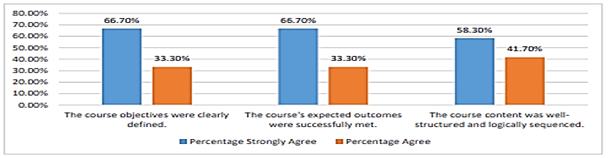
All 65 respondents either agreed or strongly agreed that the course was well-designed and effectively delivered. Specifically, 66.7% of participants strongly agreed that the course objectives were clearly defined and that the outcomes had been successfully met. Additionally, 58.3% strongly agreed that the content was logically structured and sequenced, supporting coherent learning progression throughout the course.
Figure 1: Participant Feedback on Course Design and Delivery
- Findings Related to Research Question 2
RQ2: How effective is the flipped training methodology in enhancing educators’ understanding and application of student engagement strategies?
- Satisfaction with Flipped Methodology
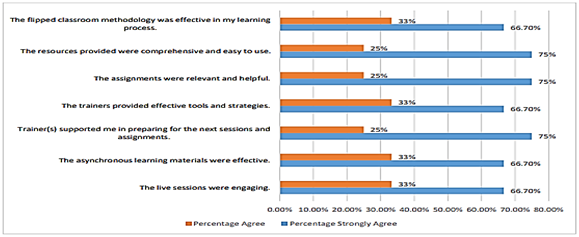
Participants reported high levels of satisfaction with the flipped learning methodology. Three-quarters of respondents (75%) strongly agreed that the trainers provided adequate support, the assignments were helpful, and the resources were comprehensive and user-friendly. Moreover, 66.7% strongly agreed that the live sessions were engaging, the asynchronous pre-class materials were effective, the methodology enhanced their learning, and the tools and strategies offered were valuable. The remaining participants agreed with these statements, with no one indicating disagreement or strong disagreement.
Figure 2: Participant Satisfaction with Flipped Classroom
- Trainer Interaction as a Component of the Flipped Model
Interaction with trainers was highly appreciated by participants. Two-thirds (66.7%) rated trainer interaction as excellent, and the remaining third (33.3%) rated it as very good, reflecting strong positive perceptions of the trainers’ support and engagement.
Figure 3: Participant Satisfaction With Trainer Interactions

66.7% of the survey respondents rated their satisfaction with the relationship and interaction with the trainers as excellent, while the remaining 33.3% rated it as very good, reflecting a high level of satisfaction overall.
- Findings Related to Research Question 3
RQ3: How useful are digital tools (WhatsApp and Microsoft Notebook) in facilitating course participation and engagement?
Communication and Platform Effectiveness
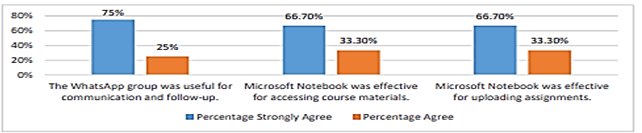
The communication and platform tools were positively perceived. Seventy-five percent of participants strongly agreed that the WhatsApp group was effective for communication and follow-up throughout the course. Similarly, 66.7% strongly agreed that Microsoft Notebook facilitated easy access to course materials and assignment submission, while the rest of the respondents agreed with its usefulness.
Figure 4: Communication and Platform Effectiveness
- Findings Related to Research Question 4
RQ4: What strengths and challenges do participants identify in the seminar-style flipped training experience?
Based on the analysis of the post-training online survey, participants’ reflections targeted three focus areas: strengths of the course, areas for improvement, and suggestions. They are highlighted in Table 1 below.
- Participant-Identified Strengths
Participants highlighted multiple strengths of the course. They appreciated the useful and actionable information provided, the introduction of new strategies for student engagement, interactive games and activities, the emphasis on promoting student voice, opportunities for self-paced learning, and the relevance of the content to real classroom contexts.
- Participant-Identified Challenges
At the same time, participants suggested several areas for improvement. Timing constraints were mentioned, with some modules perceived as too long or dense. Pre-class materials were identified as an area that could be enriched or made more interactive. Participants also noted the need for increased follow-up and accountability, as well as more collaborative or peer-based activities during the course.
- Participant-Identified Suggestions
Suggestions for enhancing future iterations of the course included classroom visits or peer observation opportunities, splitting Module 3 into two sessions to improve pacing, improving pre-class materials with interactive videos or discussion prompts, incorporating additional collaborative tasks, and offering optional face-to-face sessions when feasible.
Table 1: Participant Reflections on the Flipped Training Experience
| Strengths Offered by Training | Areas for Improvement | Suggestions |
| Useful information and new strategies | Address timing issues | Suggest classroom visits to observe course implementation |
| Use of engaging games and interactive activities | Allocate more time for the course and improve time management | Split module 3 into two distinct sessions to include more interactive games and a wrap-up session |
| Provided interactive strategies to increase student voice and engagement | Make pre-class materials more interactive (storytelling, hands-on activities) | Face-to-face sessions recommended to enhance interaction |
| Allowed learning at own pace with the ability to pause and revisit content | Improve pre-recorded materials: keep them concise, interactive, and aligned with session goals | |
| Included real-life examples and practical relevance | Strengthen follow-up and feedback after live sessions | |
| Introduce more collaborative activities and active learning strategies |
- Overall Evaluation and Future Participation
This subsection synthesizes participants’ overall evaluation of the course and their intentions regarding future participation, offering a holistic view of satisfaction and perceived value beyond individual course components.
- Overall Evaluation
Regarding overall course quality, 44.4% of participants rated the course as excellent, while the remaining 55.6% rated it as very good. These findings indicate uniformly high satisfaction with the quality of professional development experience.
Figure 5: Course Overall Quality

- Recommendations for Future Participation
All participants (100%) indicated that they would recommend the course to colleagues. In addition, 83.33% of participants expressed interest in attending similar courses in the future, whereas the remai16.67% preferred other topics outside the scope of engagement-focused professional development.
Overall, the results indicate consistently positive participant perceptions of the flipped training experience, highlighting high levels of satisfaction, perceived effectiveness, and willingness to engage in similar institutional training models in the future, while also identifying targeted areas for refinement to enhance sustainability and impact.
Taken together, these findings provide a comprehensive snapshot of participants’ overall appraisal of the flipped training model and form the basis for the interpretive analysis presented in the following discussion part of the study.
- Discussion
This section interprets the study findings in relation to the research questions and situates them within the broader literature on flipped learning, seminar-style professional development, and teacher engagement. Overall, the results indicate that a seminar-style flipped training model can serve as an effective professional development approach for enhancing educators’ understanding of student engagement, while also highlighting specific design considerations necessary to optimize its impact.
- Discussion of Findings Related to RQ1: Course Design and Delivery
The findings related to Research Question 1 demonstrate overwhelmingly positive participant perceptions regarding the clarity, coherence, and relevance of the course design and delivery. High levels of agreement regarding clearly defined objectives, logical content sequencing, and successful achievement of outcomes suggest that participants experienced the training as well-structured and purposeful.
These findings align with existing research on flipped learning, which emphasizes that transparent learning objectives and intentional alignment between asynchronous and synchronous components are critical for learner engagement and satisfaction (Anjass, Hamed, & Aguaded Ramírez, 2025). In the context of professional development, such alignment is particularly important, as teachers are more likely to engage meaningfully when training content is directly connected to their instructional realities.
Moreover, the seminar-style format appeared to enhance the perceived value of the course by providing structured opportunities for reflection, discussion, and collaborative sense-making. Participants’ appreciation of peer exchange and shared reflection mirrors characteristics of effective professional learning communities (PLCs), which have been shown to support deeper learning and greater transfer of training to classroom practice. The findings therefore suggest that the combination of clear instructional design and dialogic seminar structures contributed significantly to participants’ positive perceptions of the course.
- Discussion of Findings Related to RQ2: Effectiveness of the Flipped Training Methodology
Research Question 2 examined the effectiveness of the flipped training methodology in enhancing educators’ understanding and application of student engagement strategies. The results indicate high levels of satisfaction with both the asynchronous pre-class materials and the interactive live sessions, as well as strong appreciation for trainer support and practical assignments.
These findings support prior research suggesting that flipped learning models promote active engagement, reflection, and deeper conceptual understanding by reallocating live session time to higher-order learning activities (Alam, Khurshid, & Alam, 2024). Experiencing flipped learning as learners may also help teachers internalize its pedagogical value, increasing the likelihood that they will adopt similar strategies in their own classrooms.
Additionally, the highly positive ratings of trainer interaction suggest that facilitation quality played a key role in the effectiveness of the flipped methodology. Rather than functioning as content transmitters, trainers acted as facilitators of dialogue, reflection, and application—an instructional stance that aligns with constructivist and adult learning principles. This supports the argument that flipped professional development is most effective when paired with strong pedagogical facilitation and opportunities for collaborative inquiry.
- Discussion of Findings Related to RQ3: Usefulness of Digital Platforms in Supporting Engagement
Findings related to Research Question 3 indicate that digital platforms—specifically WhatsApp and shared digital notebook applications—were perceived as highly effective in supporting communication, material access, and overall engagement throughout the course. Participants reported that these tools reduced barriers to participation and contributed to a sustained sense of learning community beyond live sessions.
This aligns with research demonstrating that digital communication platforms can function as online communities of practice, enabling teachers to share information, resources, and pedagogical support outside formal sessions and thereby extend engagement beyond synchronous events (Ajani & Khoalenyane, 2023; Cansoy, 2017). Prior literature on professional development further highlights that communication tools such as WhatsApp enhance interaction, immediacy, and responsiveness among educators, strengthening peer collaboration and professional dialogue in both synchronous and asynchronous contexts (Áez-Delgado et al., 2025; Masagazi, Masembe, Ngaka, & Nankindu, 2025; Raha, Mima, & Mohamed, 2023).
Similarly, the role of collaborative digital environments in supporting teacher engagement is well documented: digital platforms, whether messaging applications or shared notebooks, contribute to accessibility, organization of content, and continuity of learning by offering anytime–anywhere access to materials and peer interactions (Dantes et al., 2024; Masagazi et al., 2025). These tools have been shown to maintain engagement between sessions and scaffold the asynchronous components of flipped learning environments, especially where community building and ongoing communication are design priorities (Ajani & Khoalenyane, 2023; Cansoy, 2017).
The positive perceptions reported in this study reinforce the view that thoughtfully integrated digital tools strengthen both structural and relational dimensions of professional development, particularly in seminar-style flipped models. By enabling regular communication, resource sharing, and collaborative problem solving outside live meetings, platforms like WhatsApp and shared digital notebooks help sustain engagement, foster peer support, and reinforce learning communities across the duration of a PD course (Raha et al., 2023; Dantes et al., 2024).
- Discussion of Findings Related to RQ4: Perceived Strengths and Challenges of the Training Model
Research Question 4 focused on participants’ identification of strengths and challenges associated with the seminar-style flipped training experience. Participants highlighted multiple strengths, including practical relevance, interactive activities, self-paced learning opportunities, and the applicability of engagement strategies to real classroom contexts. These strengths reflect core principles of effective professional development, particularly relevance, active learning, and immediate applicability.
At the same time, participants identified challenges related to timing, module pacing, density of pre-class materials, and the need for greater interactivity and follow-up. These concerns are consistent with challenges frequently reported in flipped learning research, where increased cognitive and time demands can lead to feelings of overload if not carefully managed (Ma, Wei, & Huang, 2024).
From a professional development perspective, these challenges underscore the importance of differentiated and inclusive instructional design. Designing pre-class materials that accommodate varied learning preferences, pacing live sessions to balance depth and workload, and incorporating multiple modes of participation can help address variability in readiness, digital literacy, and engagement. Such considerations align with Universal Design for Learning (UDL) principles, which emphasize flexibility, scaffolding, and equitable access.
- Implications for Future Training Iterations
Synthesizing findings across all research questions, several implications emerge for refining future iterations of seminar-style flipped professional development (PD) programs. First, pre-class materials should be further scaffolded and diversified to enhance interactivity and reduce cognitive load (Chen, Fan, & Fang, 2021; Lo & Hew, 2017). Second, revisiting module pacing—particularly for application-focused components—may support sustained engagement and deeper learning (Akçayır & Akçayır, 2018; Shernoff et al., 2016). Third, structured follow-up mechanisms, such as peer coaching or online reflective forums, may strengthen transfer to classroom practice and sustain professional learning communities over time (Ajani & Khoalenyane, 2023; Sáez-Delgado et al., 2025). Finally, incorporating differentiated supports can ensure that educators with varying levels of experience and digital competence are able to engage meaningfully with the training (Bredow, Birgili, & Sointu, 2021; Masagazi, Masembe, Ngaka, & Nankindu, 2025).
Collectively, these implications highlight that while seminar-style flipped training holds strong potential as an engagement-oriented PD model, its effectiveness depends on intentional instructional design, responsive facilitation, and ongoing refinement informed by participant feedback (Huang, 2025; Pianta, La Paro, & Hamre, 2008; Reeve & Tseng, 2011).
- Broader Relevance and Research Opportunities
The positive outcomes from “Engaged, Thus Learning” align with a growing body of flipped learning research that demonstrates not only student benefits, but also teacher and institutional gains. For instance, studies have explored the flipped classroom’s impact on teacher identity, particularly among second-language teachers in tertiary settings, showing that flipped models can reshape teacher professional identity, motivation, and sense of belonging (Cheng, Ritzhaupt, & Antonenko, 2022; Huang, 2025).
Furthermore, the study contributes to ongoing debates about how to sustain flipped pedagogy post-pandemic. As institutions seek to embed active learning, inclusion, and engagement in teacher training, seminar-style flipped PD offers a scalable, adaptable model (Akçayır & Akçayır, 2018; Lo & Hew, 2017).
Future research might explore the long-term trajectories, contextual conditions, and multi-level impacts of flipped professional development, including:
- Long-term impact: How do teacher practices change in their classrooms over time after participating in flipped PD?
- Student outcomes: Does teacher participation in engagement-focused flipped PD affect their students’ engagement, motivation, and achievement?
- Scalability and equity: How can flipped PD be designed to be accessible and effective in diverse contexts such as resource-limited schools and different cultural settings?
Overall, these considerations underscore the need for continued, context-sensitive research that examines flipped professional development not only as a pedagogical innovation, but as a sustainable institutional learning model capable of supporting long-term teacher growth, equitable access, and meaningful educational impact.
- Limitations of the Study
This study is subject to several methodological and contextual limitations that should be considered when interpreting the findings. First, the research relies heavily on self-reported data, including surveys, reflective assignments, and portfolio narratives. While such tools are valuable for capturing teacher perceptions and professional growth, they are inherently vulnerable to social desirability bias, recall bias, and potential overestimation of competence or improvement (Podsakoff, MacKenzie, & Podsakoff, 2012). Participants may have provided responses they believed were expected or favorable, particularly given the professional development context and their ongoing relationship with the institution.
Second, the study did not include a longitudinal follow-up, which restricts the ability to draw conclusions about the sustainability of changes in teacher knowledge, skills, or classroom management practices. Without post-intervention classroom observations or delayed assessments, it remains unclear whether the gains identified during the seminar-style training were maintained over time or translated into consistent improvements in classroom environments and student behavior (Desimone, 2009; Guskey, 2002). Similarly, the absence of student-level data limits the ability to infer any direct impact on learner outcomes, engagement levels, or academic performance.
Third, although the sample size was adequate for a mixed-method exploratory study, it remains context-specific. The participating teachers were drawn exclusively from six private schools affiliated with a single educational institution in Beirut. As such, the findings may not generalize to educators working in public schools, rural areas, under-resourced environments, or non-Lebanese educational contexts, where structural constraints, classroom dynamics, and professional development cultures differ significantly. Moreover, participation was voluntary, which may have resulted in a sample of teachers who were inherently more motivated or receptive to professional learning than the broader teaching population.
Finally, the study examined a specific seminar-style, flipped training model, which may not be equally feasible or effective in settings with limited technological infrastructure or differing institutional expectations. Future studies should incorporate comparative designs, classroom observations, and longitudinal data to deepen understanding of how such training influences actual classroom practice and student behavior (Desimone, 2009; Guskey, 2002).
- Conclusion
The Engaged, Thus Learning course demonstrates the potential of seminar-style flipped training as a powerful tool for enhancing educators’ capacity to promote student engagement. High levels of satisfaction, perceived usefulness, and willingness to recommend suggest that the model resonates with teachers. Qualitative feedback further reveals critical areas for refinement—particularly in pre-class content design, pacing, and interaction structure.
The evidence further indicates that when professional development mirrors the type of active, participatory learning environments educators aim to cultivate, the likelihood of authentic transfer increases substantially. By experiencing engagement firsthand, teachers deepen both their conceptual understanding and their practical capacity to replicate similar dynamics in their own classrooms. This positions seminar-style flipped PD as an important mechanism for bridging theory and classroom practice in sustainable ways.
By addressing these areas, future iterations of the course can become even more inclusive, interactive, and impactful. More broadly, this study offers a replicable model of flipped professional development that aligns with contemporary educational priorities: active learning, teacher agency, and engagement-focused pedagogy.
References
-1Ajani, O. A., & Khoalenyane, N. B. (2023). Using WhatsApp as a tool of learning: A systemic literature review of prospects and challenges. International Journal of Innovative Technology and Social Sciences, 8(3), 1–15. https://doi.org/10.31435/rsglobal_ijitss/30092023/8025
-2Akçayır, G., & Akçayır, M. (2018). The flipped classroom: A review of its advantages and challenges. Computers & Education, 126, 334–345. https://doi.org/10.1016/j.compedu.2018.07.021
-3Alam, A., Khurshid, F., & Alam, T. (2024). The Double Flipped Professional Development Training Program: A Voyage towards Digital Transformation. International Research Journal of Management and Social Sciences, 5(2).
-4Algarni, B. (2025). Impact of flipped learning on student self-efficacy across age groups and subject domains: A systematic review of 44 studies (2015–2024). Journal of Information Technology Education: Research, 24, Article 4. https://doi.org/10.28945/5442
-5Anjass, E., Hamed, C., & Aguaded‑Ramírez, E. M. (2025). The effectiveness of using the flipped classroom in science education for ninth-grade students. Journal of Technology and Science Education, 15(1), 78–90. https://doi.org/10.3926/jotse.2842
-6Braun, V., & Clarke, V. (2006). Using thematic analysis in psychology. Qualitative Research in Psychology, 3(2), 77–101. https://doi.org/10.1191/1478088706qp063oa
-7Bredow, C., Birgili, B., & Sointu, E. (2021). Barriers to effective flipped learning implementation: Student self‑regulation, preparation challenges, and technological readiness. Education Sciences, 15(7), 934. https://doi.org/10.3390/educsci15070934
-8Cansoy, R. (2017). Teachers’ professional development: The case of WhatsApp. Journal of Education and Learning, 6(4), 285–293. https://doi.org/10.5539/jel.v6n4p285
-9Chen, Y.-C., Fan, K.-K., & Fang, K.-T. (2021). Effect of flipped teaching on cognitive load level with mobile devices: The case of a graphic design course. Sustainability, 13(13), Article 7092. https://doi.org/10.3390/su13137092
-10Creswell, J. W., & Creswell, J. D. (2018). Research design: Qualitative, quantitative, and mixed methods approaches (5th ed.). SAGE Publications.
-11Creswell, J. W., & Plano Clark, V. L. (2017). Designing and conducting mixed methods research (3rd ed.). SAGE Publications.
-12Desimone, L. M. (2009). Improving impact studies of teachers’ professional development: Toward better conceptualizations and measures. Educational Researcher, 38(3), 181–199. https://doi.org/10.3102/0013189X08331140
-13Ed‑Dali, R. (2025). Adopting the flipped classroom model in EFL classrooms: Transforming active learning for Moroccan high school students. Asian-Pacific Journal of Second and Foreign Language Education, 10, 58. https://doi.org/10.1186/s40862-025-00369-2
-14Field, A. (2018). Discovering statistics using IBM SPSS statistics (5th ed.). SAGE Publications.
-15Fredricks, J. A., Blumenfeld, P. C., & Paris, A. H. (2004). School engagement: Potential of the concept, state of the evidence. Review of Educational Research, 74(1), 59–109. https://doi.org/10.3102/00346543074001059
-16Guskey, T. R. (2002). Professional development and teacher change. Teachers and Teaching: Theory and Practice, 8(3), 381–391. https://doi.org/10.1080/135406002100000512
-17Haddad, R. (2020). Professional development in Lebanese schools: Challenges and opportunities. International Journal of Educational Development, 76, 102–109. https://doi.org/10.1016/j.ijedudev.2020.102109
-18Huang, Z. (2025). Flipped learning in ELT: Benefits, challenges, and practical applications. Advances in Humanities Research, 12(6), 79–84. https://doi.org/10.54254/2753-7080/2025.27496
-19Lo, C. K., & Hew, K. F. (2017). A critical review of flipped classroom challenges in K-12 education: Possible solutions and recommendations for future research. Research and Practice in Technology Enhanced Learning, 12(1), Article 4. https://link.springer.com/article/10.1186/s41039-016-0044-2
-20Ma, Y., Wei, C., & Huang, F. (2024). A full-flipped classroom mode from the perspective of junior high school English teachers. Heliyon, 10(2), Article e24864. https://doi.org/10.1016/j.heliyon.2024.e24864
-21Mansour, O., & Wardat, Y. (2025). The effect of the flipped classroom strategy on motivation to learn mathematics among 9th-grade female students: A quasi-experimental study in Amman. Frontiers in Education, 10:1579358. https://doi.org/10.3389/feduc.2025.1579358
-22Masagazi, M. F., Masembe, E., Ngaka, W., & Nankindu, P. (2025). Harnessing WhatsApp for continuous professional development: A self‑directed approach for Luganda teachers. East African Journal of Education Studies, 8(2), 644–660. https://doi.org/10.37284/eajes.8.2.3106
-23Mizza, D., Reese, M., & Malouche, D. (2025). Flipped classroom evaluation and blended learning potential: A case study of engagement and inclusion in quantitative education. Smart Learning Environments, 12, Article 56. https://doi.org/10.1186/s40561-025-00412-2
24-Molina‑Torres, M. P. (2024). Flipped classroom to teach digital skills during COVID-19. Journal of Technology and Science Education, 14(1), 158–168. https://doi.org/10.3926/jotse.2256
25-Nowell, L. S., Norris, J. M., White, D. E., & Moules, N. J. (2017). Thematic analysis: Striving to meet the trustworthiness criteria. International Journal of Qualitative Methods, 16(1), 1–13. https://doi.org/10.1177/1609406917733847
26-Patton, M. Q. (2015). Qualitative research & evaluation methods (4th ed.). SAGE Publications.
27-Peng, W., Yang, Y., Zhang, Z., & Li, T. J.-J. (2025). GLITTER: An AI-assisted platform for material-grounded asynchronous discussion in flipped learning.
28-Pianta, R. C., La Paro, K. M., & Hamre, B. K. (2008). Classroom assessment scoring system (CLASS) manual, K-3. Paul H. Brookes Publishing.
29-Podsakoff, P. M., MacKenzie, S. B., & Podsakoff, N. P. (2012). Sources of method bias in social science research and recommendations on how to control it. Annual Review of Psychology, 63, 539–569. https://doi.org/10.1146/annurev-psych-120710-100452
30-Raha, Y., Mima, W., & Mohamed, B. (2023). Exploring Moroccan EFL teachers’ engagement in a WhatsApp professional development group: Benefits and concerns. International Journal of Linguistics and Translation Studies, 4(4), 46–60. https://doi.org/10.36892/ijlts.v4i4.378
31-Rambe, P., Chipunza, C., & Ng’ambi, D. (2020). Using WhatsApp for co-creation of learning resources: A case of a South African university. The Journal for Transdisciplinary Research in Southern Africa, 16(1), 1–12. https://doi.org/10.4102/td.v16i1.791
32-Reeve, J., & Tseng, C. M. (2011). Agency as a fourth aspect of students’ engagement during learning activities. Contemporary Educational Psychology, 36(4), 257–267. https://doi.org/10.1016/j.cedpsych.2011.05.002
33-Sáez-Delgado, F., Coronado-Sanchez, P. C., Mella-Norambuena, F. J., & López Angulo, Y. (2025). Use of digital technologies to support socioemotional teacher training: A systematic review. Education Sciences, 15(10), 1377. https://doi.org/10.3390/educsci15101377
34-Salameh, R., & Zbib, I. (2021). Teacher professional development in Lebanon: Barriers, innovations, and policy directions. Mediterranean Journal of Educational Studies, 26(2), 45–63.
35-Sanchez-Gil-Machín, R., Baena Morales, S., Molina-García, N., & Ferriz-Valero, A. (2025). Impact of feedback in flipped learning on the development of soft skills of university students. Education Sciences, 15(1), 63. https://doi.org/10.3390/educsci15010063
36-Shernoff, D. J., Csikszentmihalyi, M., Schneider, B., & Shernoff, E. S. (2016). Student engagement in high school classrooms from the perspective of flow theory. In Handbook of Research on Student Engagement (pp. 149–172). Springer. https://doi.org/10.1007/978-1-4614-2018-7_7
37-Skinner, E. A., & Pitzer, J. R. (2012). Developmental dynamics of student engagement, coping, and everyday resilience. In Handbook of Research on Student Engagement (pp. 21–44). Springer. https://doi.org/10.1007/978-1-4614-2018-7_2
38-Wang, M.-T., Chow, A., Hofkens, T., & Salmela-Aro, K. (2015). The trajectories of student emotional engagement and school burnout with academic and psychological development: Findings from Finnish adolescents. Learning and Instruction, 36, 57–65. https://doi.org/10.1016/j.learninstruc.2014.11.004
39-Weerapa Pongpanich, W., Chomthong, W., Choeykhunthot, A., Tammati, K., Rangkharat, P., & Jantakoon, T. (2025). Exploring flipped classrooms in EFL teaching: A comprehensive systematic review. Higher Education Studies, 15(2), 23. https://doi.org/10.5539/hes.v15n2p23
[1] – Master’s student (research track) at the Lebanese University, Faculty of Education – Educational Administration – Educational Leader – Researcher – Certified Trainer. Email: sa7arsha3er@hotmail.com
طالبة ماجيستير بحثي في الجامعة اللبنانيّة كلّية التربيّة – الإدارة التّربويّة – قائدة تعليميّة – باحثة – مدرّبة معتمدة.
